For thousands of years, crafts were central elements of regional and national cultural identity. Today, many traditional crafts have disappeared entirely or are kept alive only by individual idealists in defiance of ephemeral trends and the dominance of industrialized mass production. As is well known, new artistically oriented scenes began to emerge in various areas of craftsmanship from the mid-20th century onward. Like jewelry artists, for example, they have developed their own forms of expression and identities and have engaged in international exchanges.
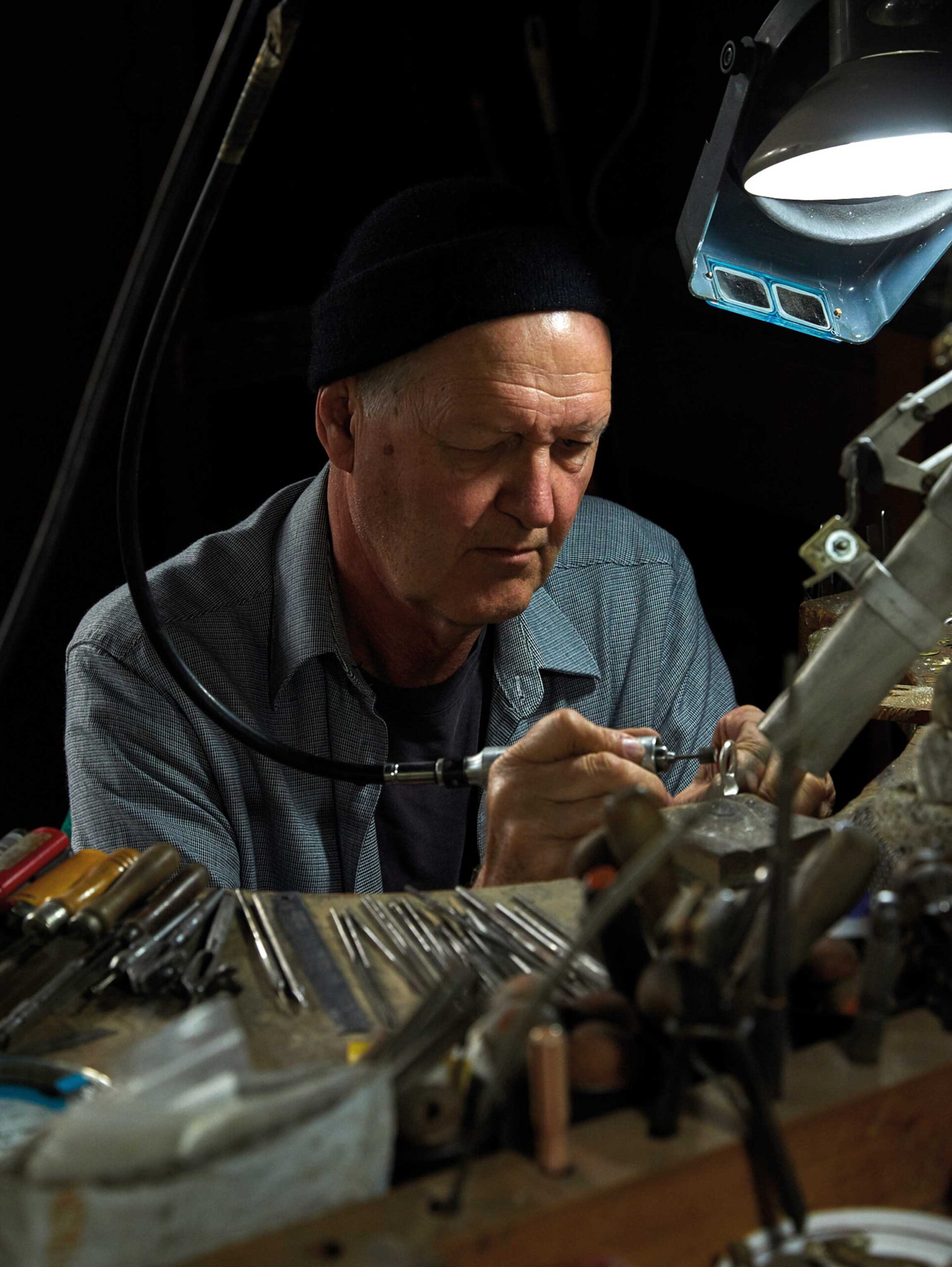
Jewelry artist Warwick Freeman, New Zealand. Photo by Sam Hartnett, from Hook Hand Heart Star, published by Die Neue Sammlung – The Design Museum and Objectspace. Published by arnoldsche Art Publishers, 2025.
Our cover story about Warwick Freeman from New Zealand – based on the book Hook Hand Heart Star – is a particularly interesting example, not only because New Zealand is located on the opposite side of the world from Europe, but also because this jewelry artist was confronted with the indigenous Maori culture there
The current exhibition Ceramics since 1946 at the GRASSI Museum of Applied Arts in Leipzig exemplifies how cultural identity in the ceramics scene transcends national borders. As in jewelry, so too in ceramics, the artists’ yearning for renewal and orientation toward modernist artistic positions impelled them to question traditions and venture into new territory. This was accompanied by growing opportunities to travel, study, work and exchange ideas in other countries. Thus, ceramic art, like jewelry art, presents itself today as a fascinating field for collectors and a genre with fluid boundaries to the fine arts. Renate Luckner-Bien presents highlights from the Leipzig exhibition.
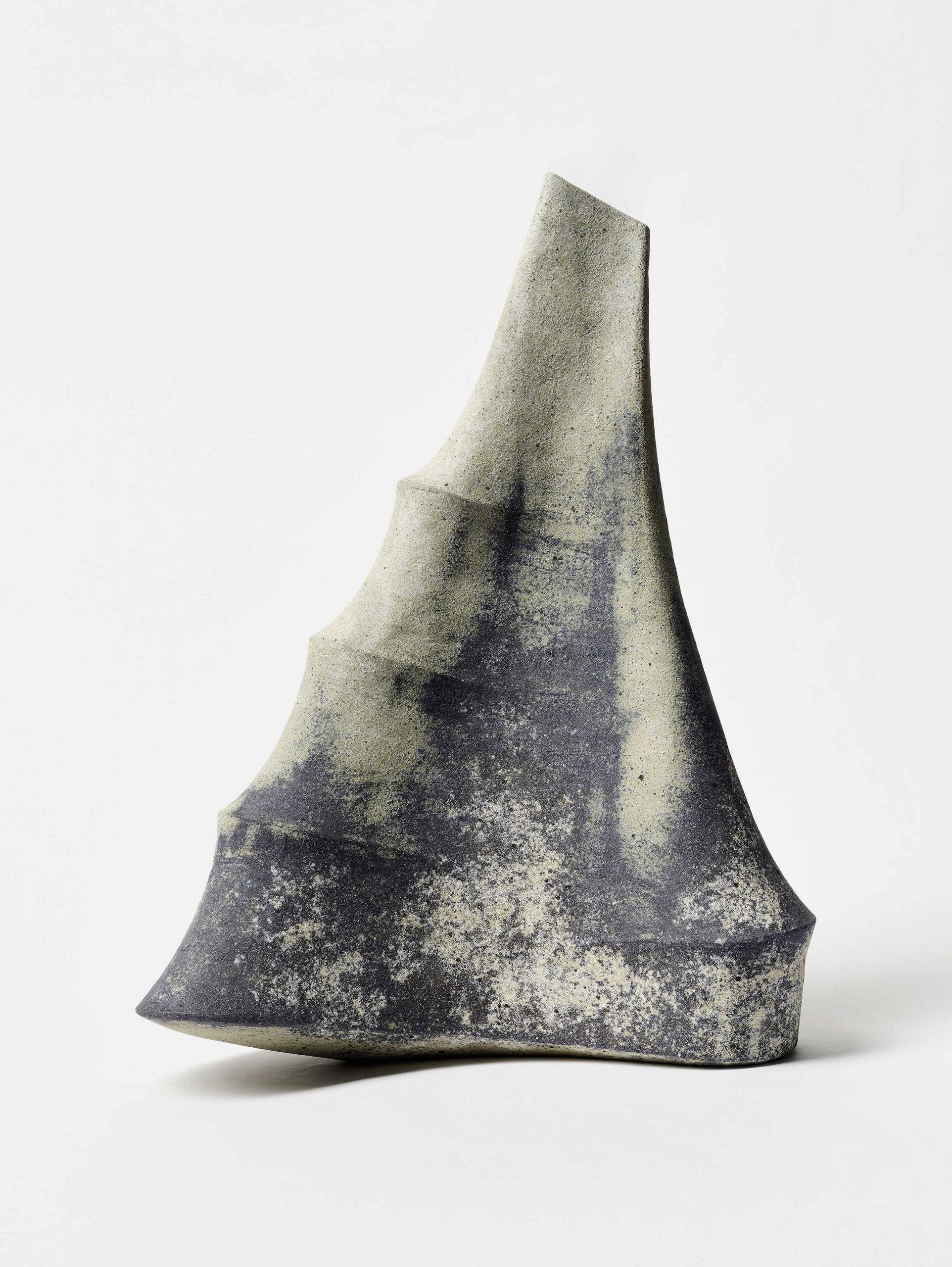
Free-form sculpture or traditional vessel shape? In the field of ceramics, fluid transitions have emerged worldwide. A work by Ken Mihara in the exhibition at the GRASSI Museum of Applied Arts. Photo: Esther Hoyer.
The emergence of new scenes and cultural identities, which are grouped internationally under the umbrella term “craft,” is far from over. This is impressively shown by the Loewe Foundation Craft Prize, which has been conferred annually since 2016. For the current 2026 edition, the Loewe Foundation received more than 5,100 submissions from artists in 133 countries. Participants include new countries, artists and concepts, thus expanding and enhancing the existing scenes. The winner and two special mentions of the Loewe Foundation Craft Prize will be announced on May 12, 2026. Art Aurea was already in print by then. But even in the run-up to the event, there is much to report about this fantastic competition.
What does it sound like when colleagues, rather than freelance authors, write about the art of others? Is the other person appreciated or is there a touch of jealousy? We begin with Johannes Nagel on Morten Løbner Espersen.
The Danner Foundation has been supporting contemporary crafts for more than a century. Its latest innovation is the Danner-Expo for glass, ceramics and metal at the International Crafts Fair (IHM) in Munich. Ira Mazzoni describes the latest activities of this exemplary foundation in Bavaria.
New Series: My Story, My Work
The new series My Story, My Work replaces Curator’s Choice, in which curators could nominate artists of their choice for a short profile. Our first story comes from Carmela Dacchille of Palermo, Sicily. The architect shares how she came up with the idea for her Edizioni Precarie and what she is achieving with this extraordinary paper project in the Sicilian metropolis.
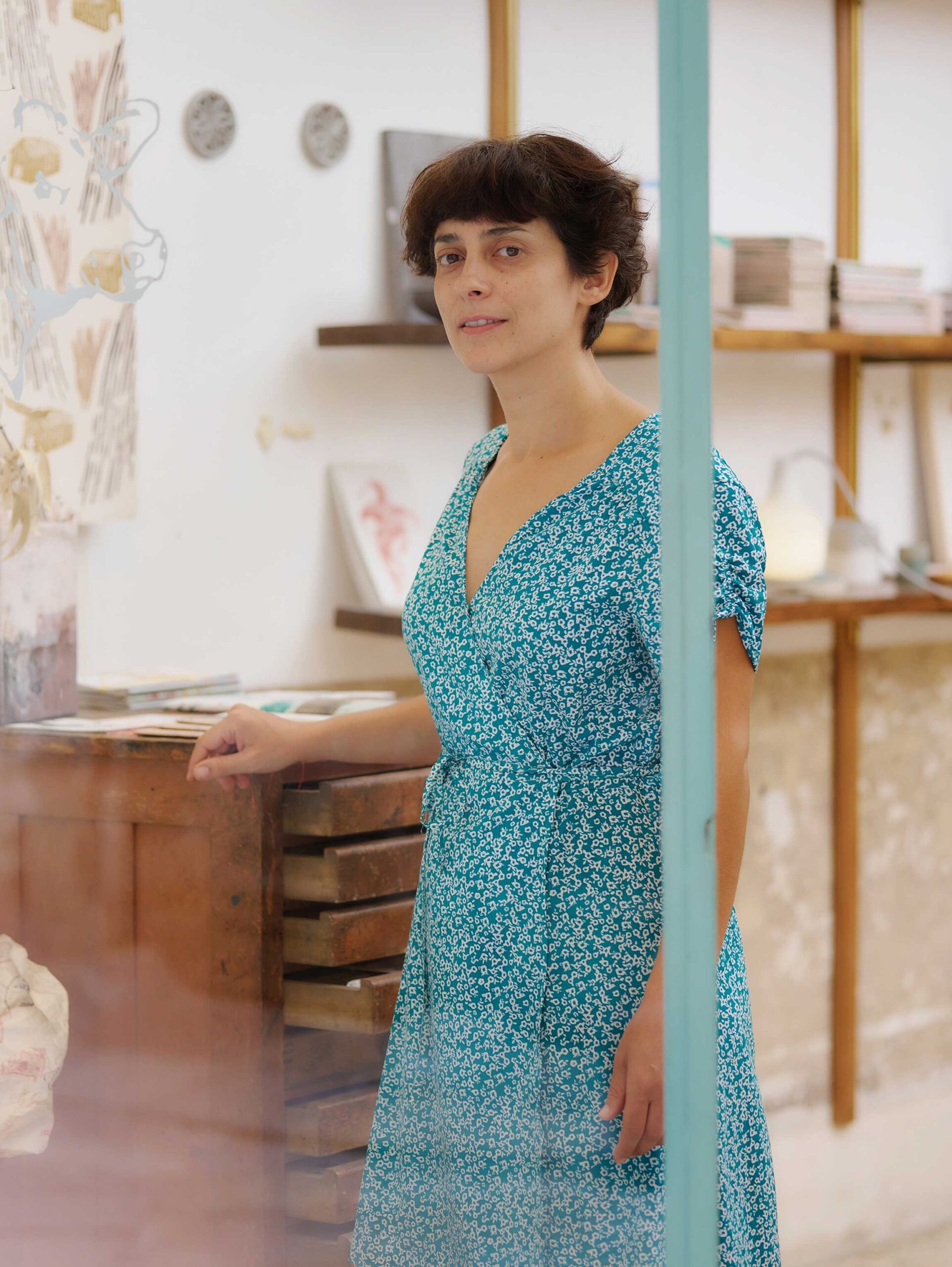
Carmela Dacchile, the founder of Edizioni Precarie in Palermo. Photo Luigi Fiano.
Like Carmela Dacchille’s story, the second installment of My Story, My Work is also about a fresh start. About 15 years ago, Melanie van der Donk decided to follow her early fascination with ceramic forms and vessels and embark on a new professional path.
Anyone who has an exciting story to tell and would like to present a high-quality body of work in this way is cordially invited to apply at ludwig@artaurea.de.
Review
The articles on current exhibitions and competitions begin with the previously mentioned piece on the Loewe Foundation Craft Prize 2026.
In our summer interview, we introduce the concept behind Galerie haptik. Kathrin and Thorsten Held have transformed a merchant’s courtyard in Flensburg’s historic old town into a venue for exquisite arts and crafts. They even travel to Japan regularly to meet their artists.

Kathrin and Thorsten Held, founders of Galerie haptik for Applied Arts in Flensburg.
Herbert Hofmann Prizes 2026. They go to Zhipeng Wang, China, Mira Kim, Korea/Canada, and Ela Bauer, Netherlands.
Hessian State Prize 2026. For the German arts and crafts sector, state awards are a key element in both supporting and raising the profile of individual artists. The Hessian State Prize has been awarded since 1951.
The Soul of Objects. The exhibition at the GRASSI Museum for Applied Arts in Leipzig celebrates the harmony between indigenous traditions and contemporary design.
By Nature. Eva Maisch’s summer exhibition in 2026 is dedicated to a theme that touches us all.

Christiane Englsberger has mastered the now nearly forgotten Swiss art of straw plaiting. Garland Brooch. On display in the exhibition Von Natur aus from July 3 to 5, 2026, in Lindelbach/Randersacker.
Perspective: Art Jewelry
Along the Interface to Fashion Jewelry art speaks a language that only a few people understand. Can a craftsperson be successful and happy with jewelry art in today’s and tomorrow’s world? Stina Bross grappled with such questions as a jewelry student – and sought advice from Sonja Bischur, one of her instructors.
Where to find Art Aurea
As usual, Art Aurea magazine has 92 pages including the cover and is available by subscription and in leading galleries and stores.