Andreas Rier blows some of his glass objects in wooden molds that he crafts using a chainsaw and carving knives. He is inspired by nature, “by its change and its constancy, its growth and decay,” he admits. Rier is one of seven artists whose works Eva Maisch is presenting this year at her 2026 Summer Festival in Lindelbach. Her exhibition theme, “By Nature,” opens up a space that touches us deeply in an age of threatened habitats and artificial intelligence. Hardly any art form is conceivable without inspiration from nature. This is especially true for the applied arts, which only become meaningful through the connection of hand and heart, matter and spirit.
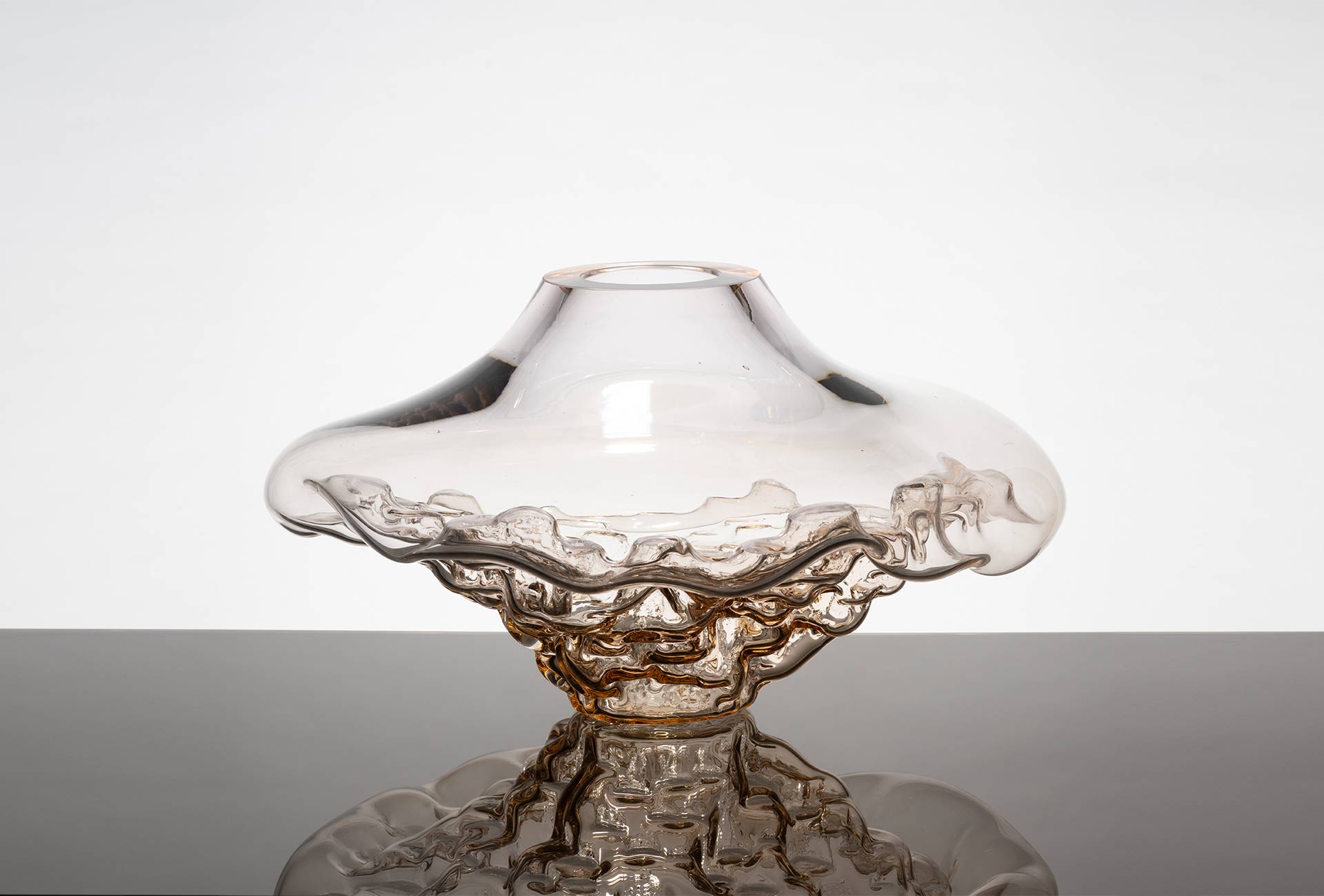
Glass sculpture by Andreas Rier, an up-and-coming artist from South Tyrol.
A good example of this is the jewelry created by Mirjam Hiller. Her main motif is the search for intensity and enchantment. To this end, the jewelry artist explores the beauty of nature as well as our culture—and then patiently saws, bends, and folds filigree, flower-like forms from powder-coated steel or copper sheet. “My goal is for the jewelry to feel alive when worn,” she says.
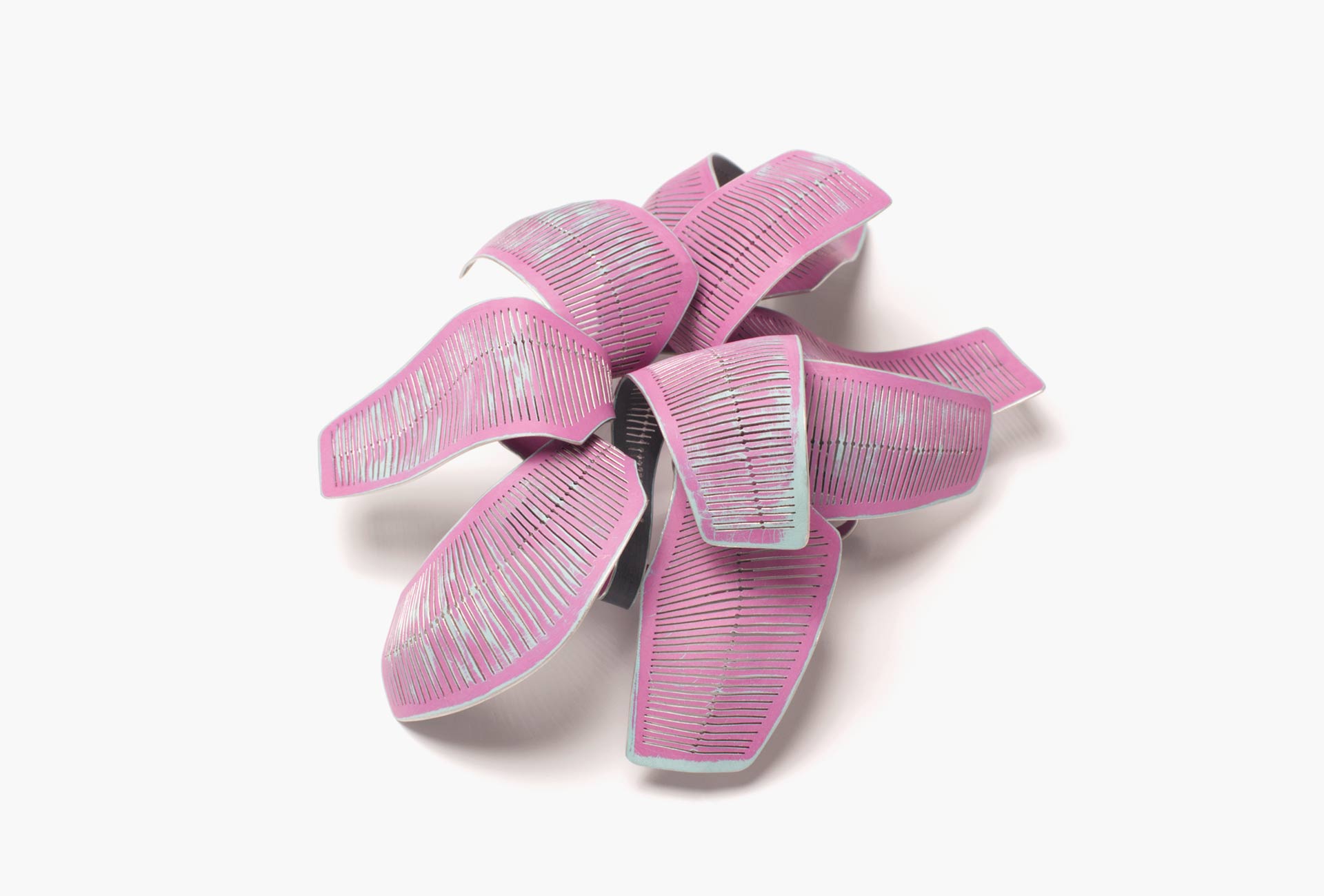
mefaendas brooch by Mirjam Hiller. A blend of elegance, conceptual art, and craftsmanship.
As a subject in the visual arts and a medium for slowing down, embroidery has been experiencing a renaissance for years. Victoria Martini transforms fleeting nature into graphic layers and interplay of lines. Organic forms such as dandelions, forget-me-nots, or plantains appear in a timeless, graphic aesthetic.
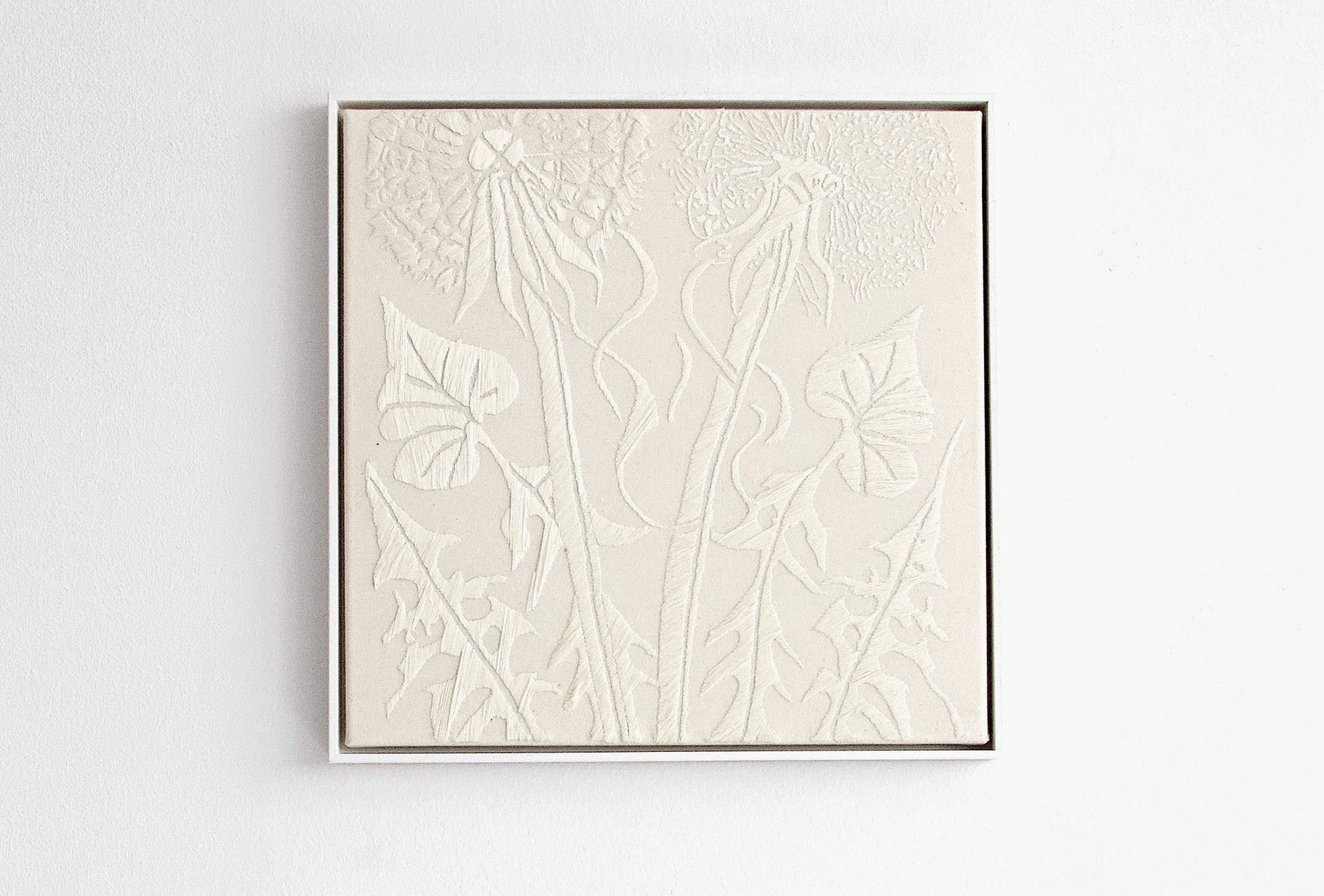
Nature transformed into art through needle and thread. The Transformation I by Victoria Martini, 42 x 42 cm.
Konrad Koppold uses wood from trees that were felled by a storm or for safety reasons. The trained carpenter, now an international artist, particularly loves the gnarled crowns of oak trees, whose branch forks and growths reflect life. This is evident in every detail of his sculptural wooden objects.
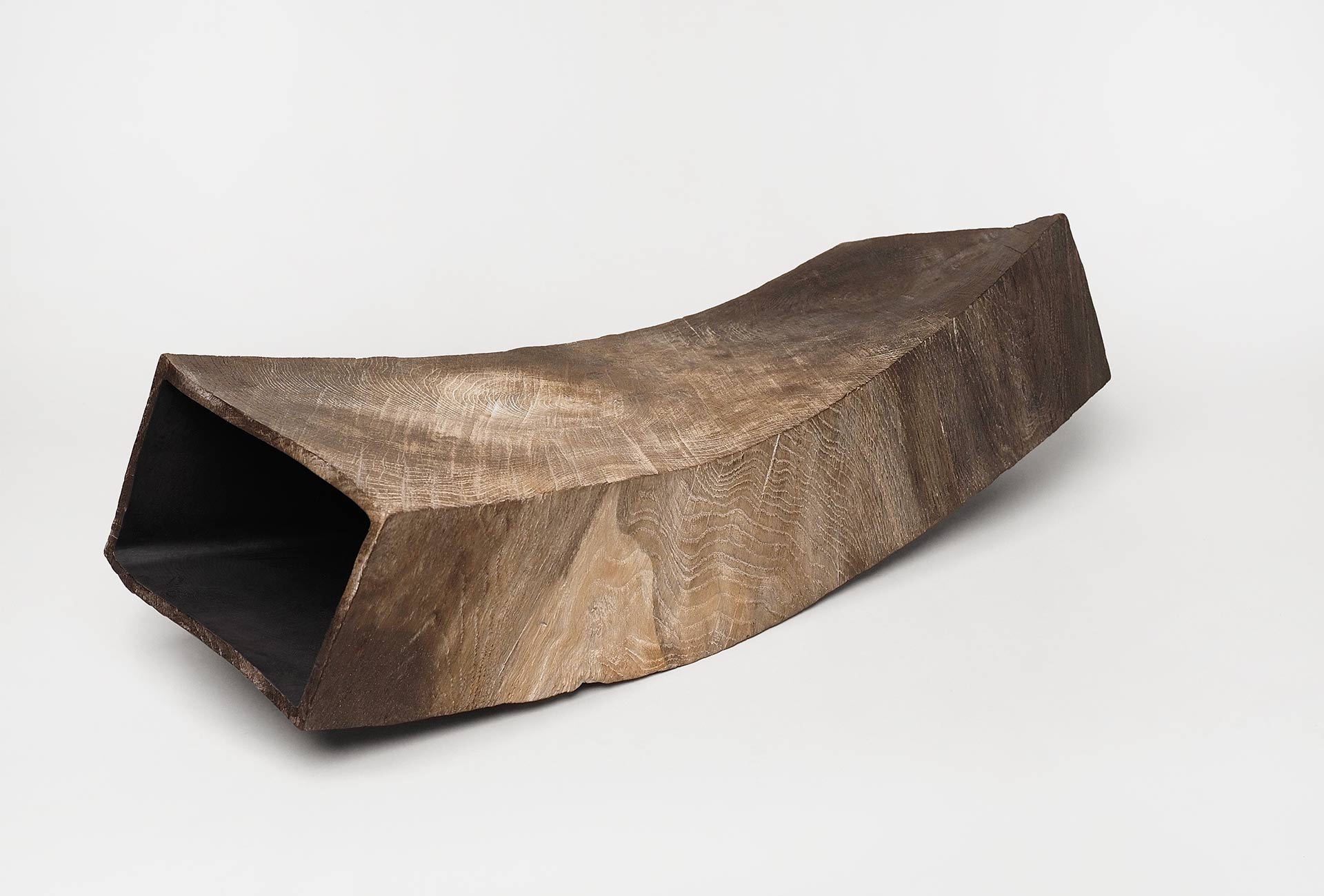
For his expressive sculptures, Konrad Koppold likes to use oak wood with ist lively knots and textures.
Christiane Englsberger’s work is the now nearly forgotten Swiss art of straw weaving. In this process, straw cut into strips is shaped into delicate leaves and flowers. The minimalist color palette gives rise to unusual headwear and objects. The natural materials and motifs convey an innocent cheerfulness and romance.
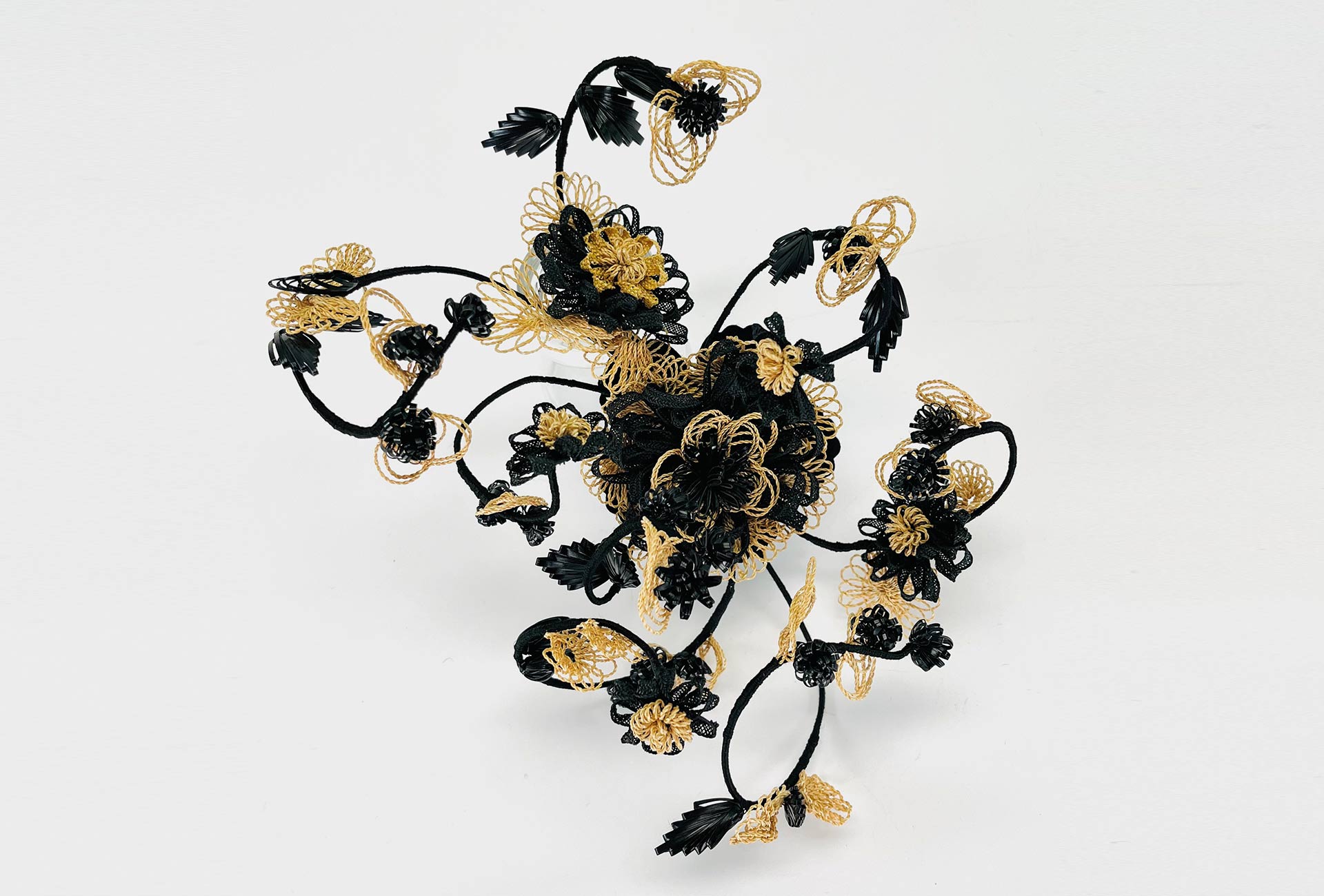
Straw weaving is part of Switzerland’s intangible cultural heritage, protected by UNESCO. The brooch Girlande by Christiane Englsberger is a contemporary contribution.
Another jewelry artist in Eva Maisch’s “Naturreigen” is Petra Dömling, who was born in Würzburg. “A flower from our garden as a form, a motif on fabric as an embossing in metal, a memory as an image, or my surroundings as movement—these are the starting points for my work in creating a piece of jewelry from precious metal bands.”
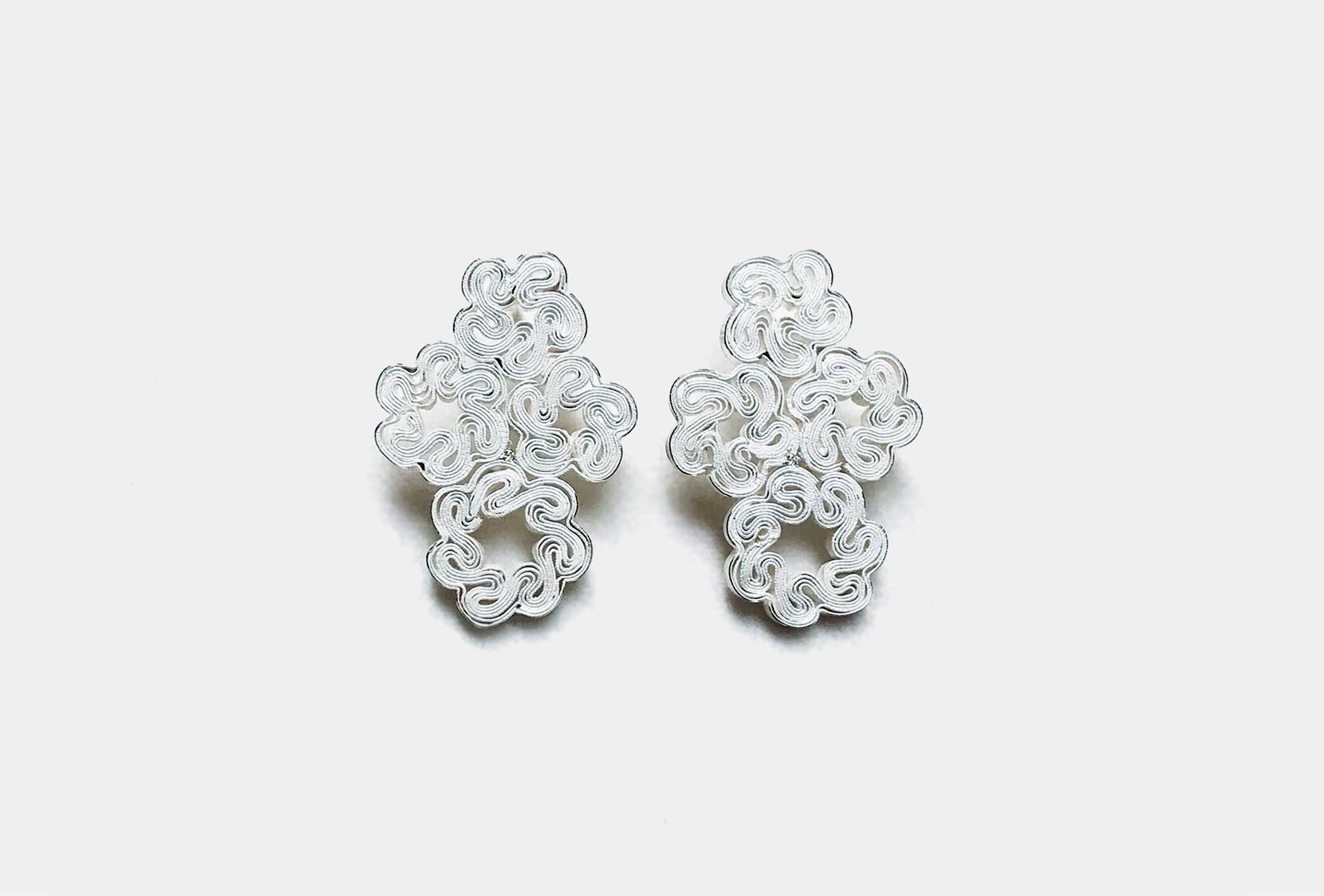
Earrings from the Intens series by Petra Dömling. Inspired by nature, wafer-thin bands of precious metal are shaped into jewelry.
The ceramics by Hungarian artist Zsolt József Simon evoke structures from the plant and animal kingdoms or microscopically small diatoms. The subtle color palette underscores the meaning: “White, reminiscent of bones; yellow, alluding to flora; and gray, deepening the mystery.” Julie Metzdorf will speak at the exhibition opening on Friday evening.
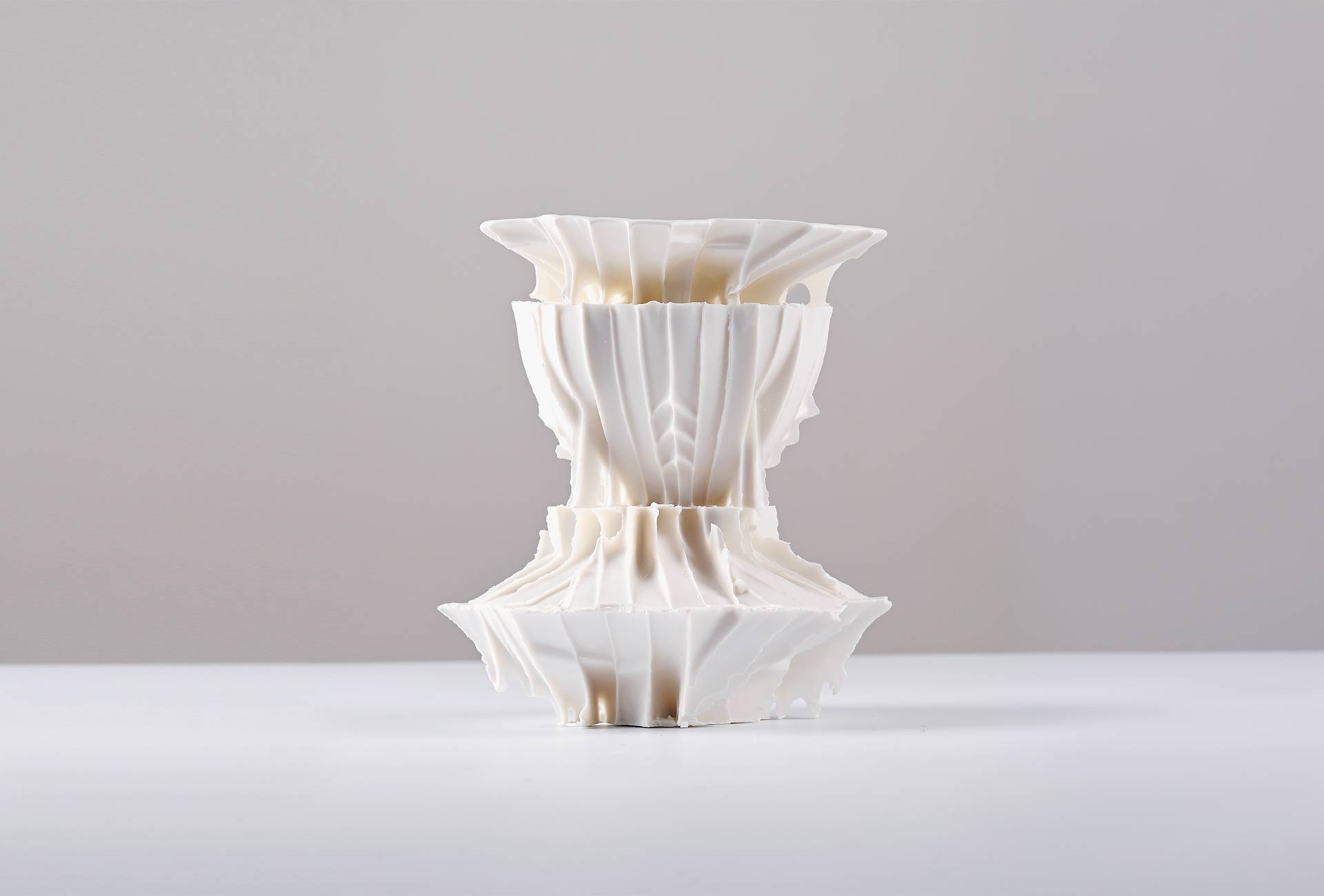
Keramikkünstler der Gegenwart haben sich vom Dogma des Gefäßes befreit, spielen aber gern mit seiner Symbolik. So wie es Zsolt József Simon bei Eva Maisch zeigt.
- —
-
Im Hofstall
Wäldleinstraße 1
D-97236 Randersacker/Lindelbach
Germany