Throughout the modern era, many courageous and visionary women have fought for their rights. Sadly, quite a few had to die for their ideals, and the struggle continues to this day. For some of them, art was and remains a medium of resistance and emancipation. For example, for Ida Dehmel, who founded GEDOK in Hamburg in 1926. The German acronym stands for “Association of German and Austrian Women Artists of All Art Forms.” Since then, this women’s group, now a registered association, has not only supported and encouraged countless women artistically and improved their working conditions. From the very beginning, the equality of the fine and applied arts was central to the self-conception of Ida Dehmel and GEDOK. Examples can be found in the exhibition essays “Arts, Women, Network” and “Chain Reaction”.

On display in the exhibition Chain Reaction on the occasion of the 100th anniversary of GEDOK in Munich, March 4–April 17, 2026. Kirsten Plank, Necklace/Portrait Marylin – broken beauty, 2023. Silver, bronze, pigment, wood, bone. © Kirsten Plank.
Gertraud Möhwald’s childhood ended abruptly with the destruction of her birthplace, Dresden, in 1945 and the death of her father. Thus began her development as a ceramicist and sculptor amidst the ruins of a bombed-out city. When Gertraud Möhwald applied to the Burg Giebichenstein University of Art and Design, she was advised to complete an apprenticeship before beginning her studies. With her resulting ability to understand and develop things sculpturally, she became an important teacher and a role model for many artists who dedicate themselves to clay as an artistic material. Renate Luckner-Bien’s interview explores this topic in greater depth.
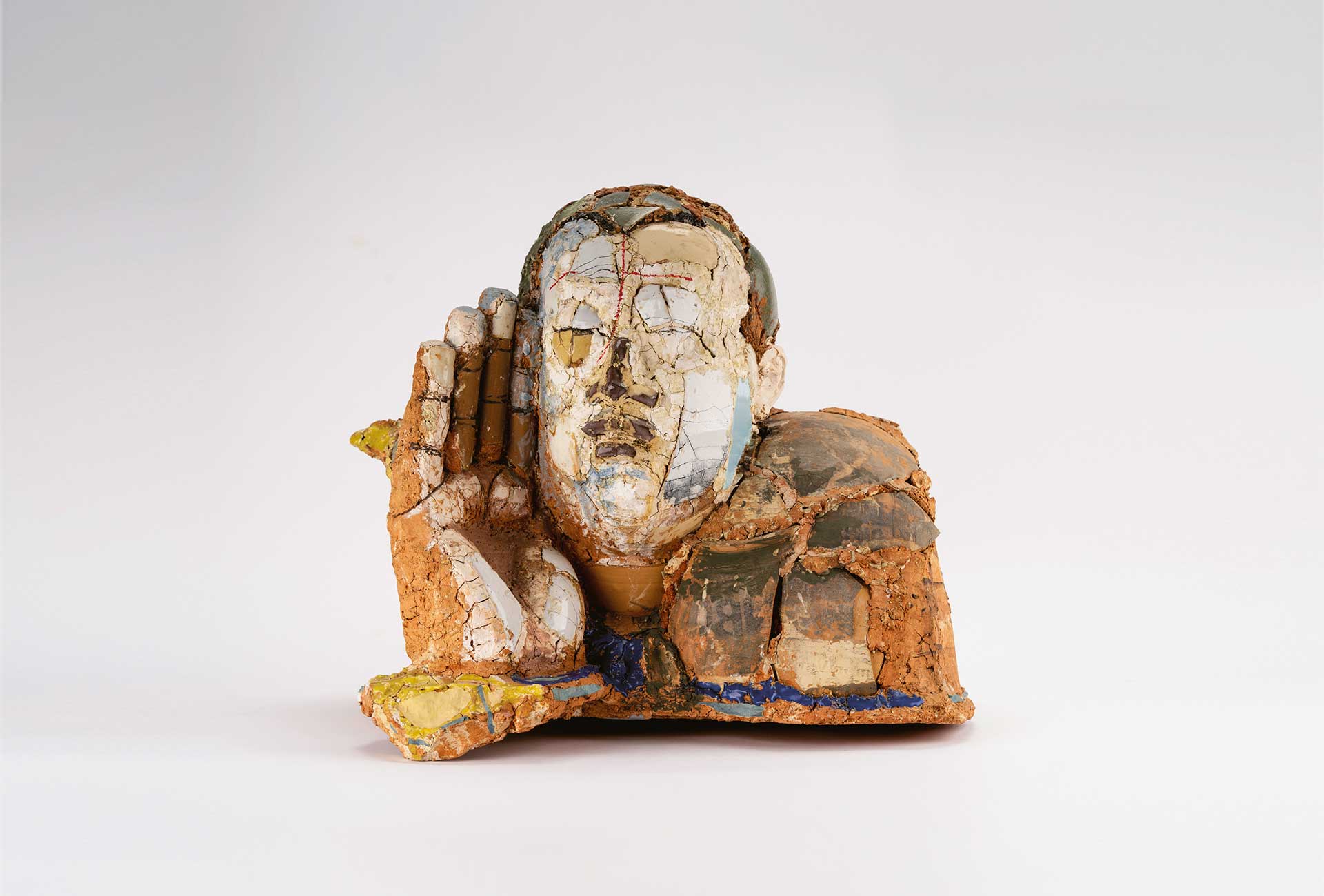
Gertraud Möhwald. Bust of a woman holding her hand to her head, 1992, H 45.5 cm, Museum of Applied Arts, Gera. Photo: Marcus Rebhan, ThULB Jena.
We live in a time that, more than ever, suffers under narcissistic rulers. Even the historically strong bond between Europe and the USA is on the brink. It’s worth remembering that there is another America, for example, that of Helen Williams Drutt. Born in 1930, this Philadelphia gallerist and collector has tirelessly dedicated her life to the applied arts and especially to jewelry as an artistic medium. Helen Drutt traveled to Germany as early as the 1960s to learn about jewelry art on the other side of the Atlantic. Since then, she has cultivated numerous friendships and contributed to mutual appreciation between the USA and Europe. Our article on American and German jewelry from the Helen Williams Drutt Collection in Galerie Handwerk.
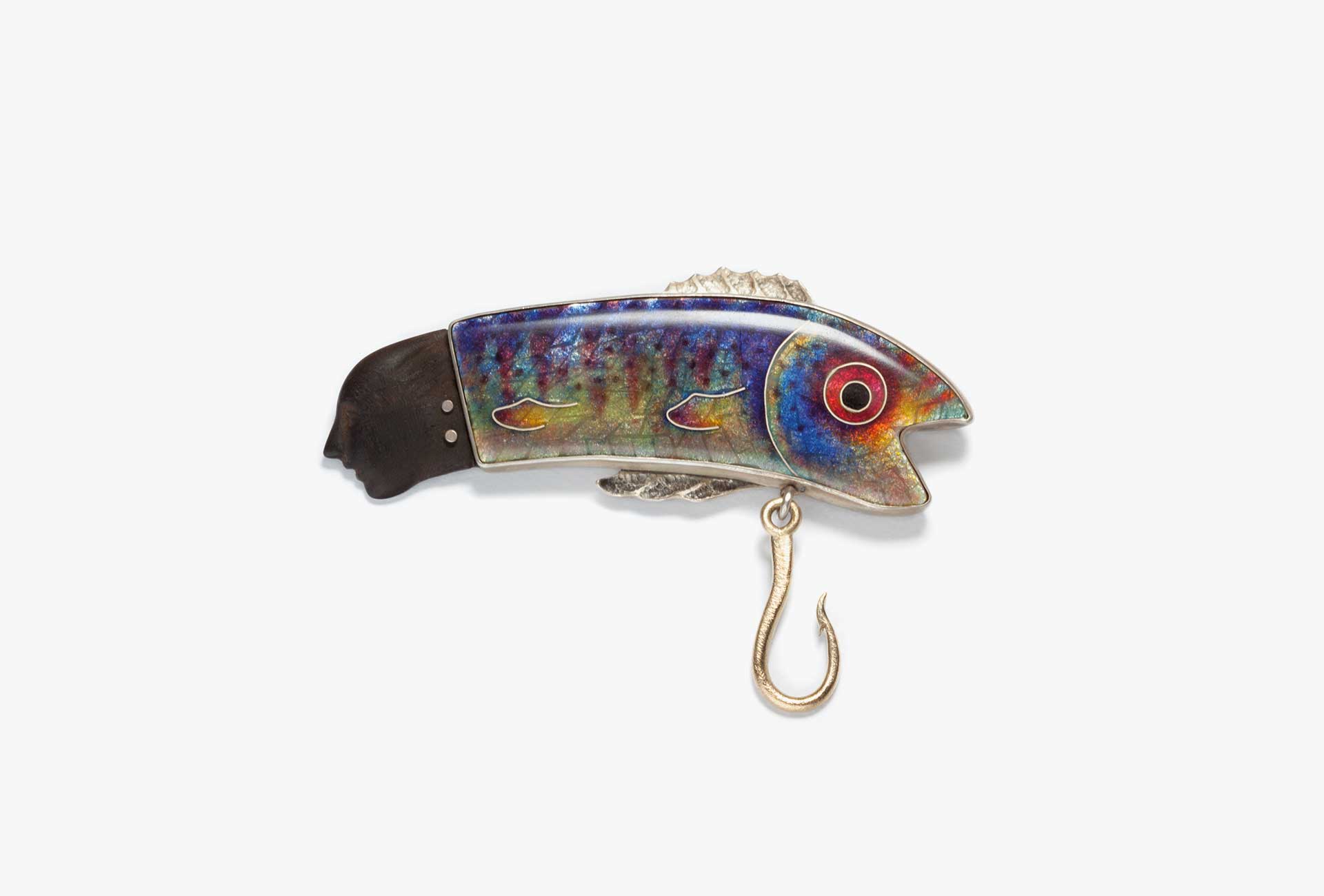
Jewelry art transcends borders and connects continents. Helen Drutt’s collection proves it. On display from March 4, 2026, at the Munich Handwerk Gallery. Elizabeth Garrison, brooch Night Fishing #1, 1986. Ebony, enamel, silver, 9.6 x 7 x 0.4 cm. Photo Eva Jünger.
The power of (applied) art to bridge cultures and ethnicities is also evident in the story of Erico Nagai, beginning on page 20. She was the first female student from Japan to study goldsmithing and silversmithing at the Academy of Fine Arts in Munich. The craftsmanship and artistic quality of her work convinced discerning gallery owners that jewelry can indeed stand alongside significant works of fine art. The life story of Erico Nagai, who has long since made Munich her home, is yet another example of what is possible when women develop their skills in art and craft across cultural boundaries.
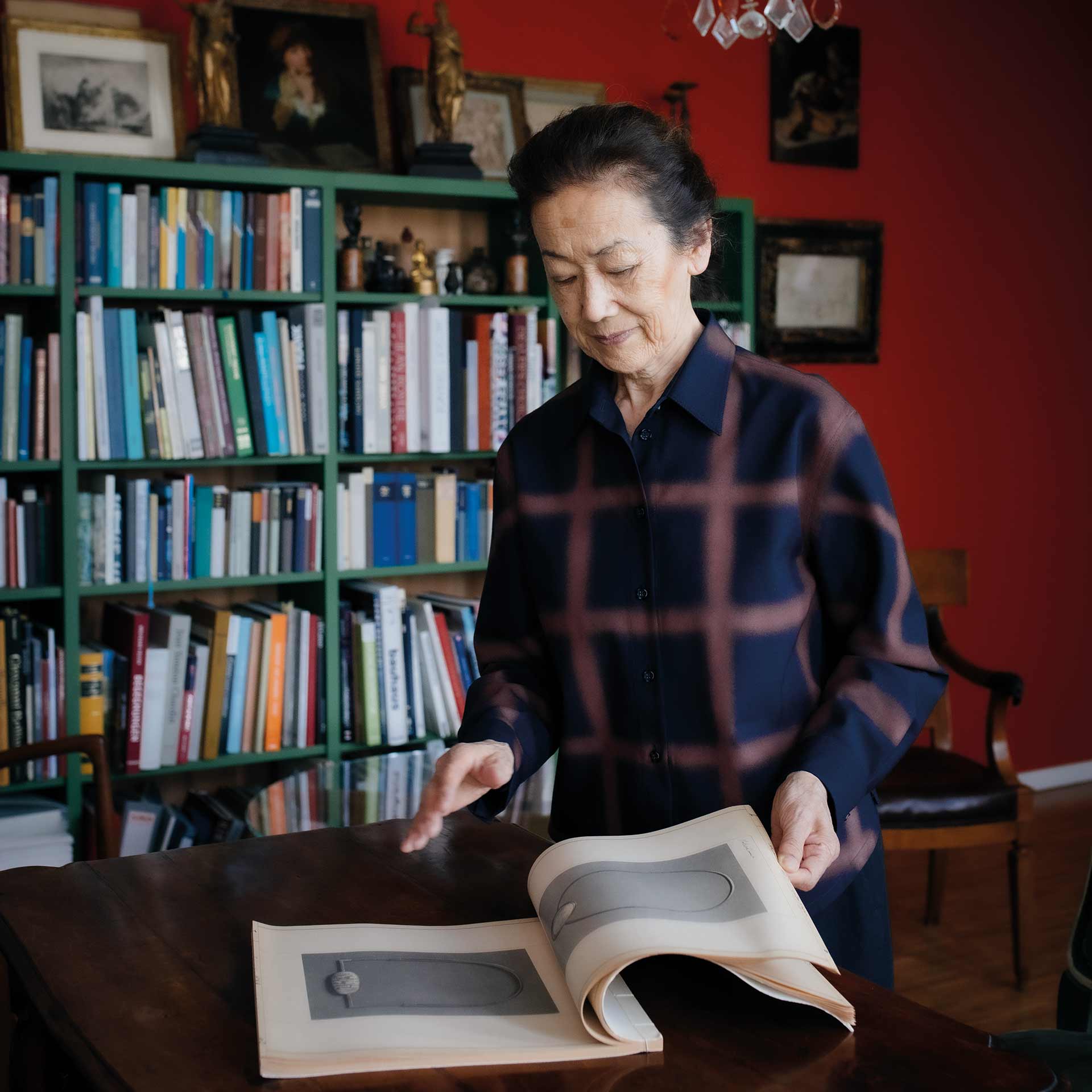
Erico Nagai was the first student from Japan to study at the Academy of Fine Arts in Munich in the class for gold and silversmithing. Her exciting story can be found in the new Art Aurea magazine.
Many artists have recently impressed audiences at biennials and major exhibitions with textile works. Ursula Wagner explores the sculptural possibilities of textiles. She conducts her research and development in her studio in Murnau am Staffelsee and at the TextielLab in Tilburg, Netherlands. Julie Metzdorf visited the researcher at her loom.
Curators’ Choice
Five internationally renowned artists and their current works. Ingrid Rügemer’s selection, made in collaboration with renowned gallery owners and curators, once again showcases international excellence in which the boundaries between art, craft, and design become irrelevant.
Nikolay Sardamov. The Bulgarian jewelry artist combines playful lightness with structural logic in his works.
Bibi Smit. Light, color, and flowing forms are characteristic features of the Dutch artist’s glasswork.
Alvina Jakobsson. Shaped and organic-looking folds – not made of fabric, but of clay. A special kind of ceramic art from Sweden.
Charlotte Culot. In her artistic carpets, the Swiss artist translates the colors and compositions of her collages into a tangible dimension.
Alan Meredith. The Irish designer and artist respects the unique properties of wood while playfully challenging his material.
Review
Among friends. American and German jewelry art from the Helen Williams Drutt Collection at the Galerie Handwerk.
Arts, women, network. The MK&G, Hamburg, celebrates the 100th anniversary of GEDOK.
Chain reaction. A jewelry exhibition marking the 100th anniversary of GEDOK in Munich.
What forms conceal. Interview with Isabella Hund about her exhibition with Kazuko Nishibayashi and Etsuko Sonobe.
Jewelry Design 2026. New works from authentic German workshops.
Meeting place Munich. The Handwerk & Design trade fair, part of the International Handicrafts Fair in Munich, brings together designers from all over the world.
Where to find Art Aurea
As usual, Art Aurea magazine has 92 pages including the cover and is available by subscription and in leading galleries and stores.