The crimes committed by the National Socialists remain immeasurable to this day. They also left their mark on arts and crafts. While presuming to be able to define an Aryan, realistic Deutsche Kunst [German art], they exploited Kunsthandwerk [crafts] for their inhuman ideology. Racist, nationalist, and anti-modern ideas had an impact on training, content, and the appreciation of craft and design. Crafts were supposed to cultivate “German” forms and techniques: realistic wood carving, traditional pottery, textile techniques, and metalwork. Abstract art, on the other hand, was devalued, ridiculed, and banned. Many designers, especially Jewish ones, lost their teaching positions, commissions, and livelihoods. The best-known example is the dissolution of the Bauhaus under pressure from the Nazis.
The regime recognized early on the propaganda potential of crafts. It was used in exhibitions, model settlements, and representative buildings to stage a sense of closeness to the people, attachment to the homeland, and social harmony. Furniture, tableware, textiles, jewelry, and church furnishings were ideologically charged – for example, with runes, Reich symbols, or Germanic ornamentation. Wherever possible, the valued quality of craftsmanship was subordinated to political messages.

Radio Deutscher Kleinempfänger (German small receiver), design: around 1938, manufacture: IKA Radio, Lódz (Poland), around 1940. Plastic, textile. Donated by a private individual, 2012. Photo Esther Hoyer.
In Leipzig, over 400 exhibits from the Nazi era are on display, “from elaborate one-offs to mass-produced design products, often made from politically favored materials such as wrought iron, local woods, tin, textiles, and amber.” The Leipzig exhibition also states: “Many of the exhibits were state-sponsored or shown at official exhibitions, competitions, and trade shows. Others were created under forced labor or in concentration camps. Photographs and contemporary documents complement the extensive presentation.”
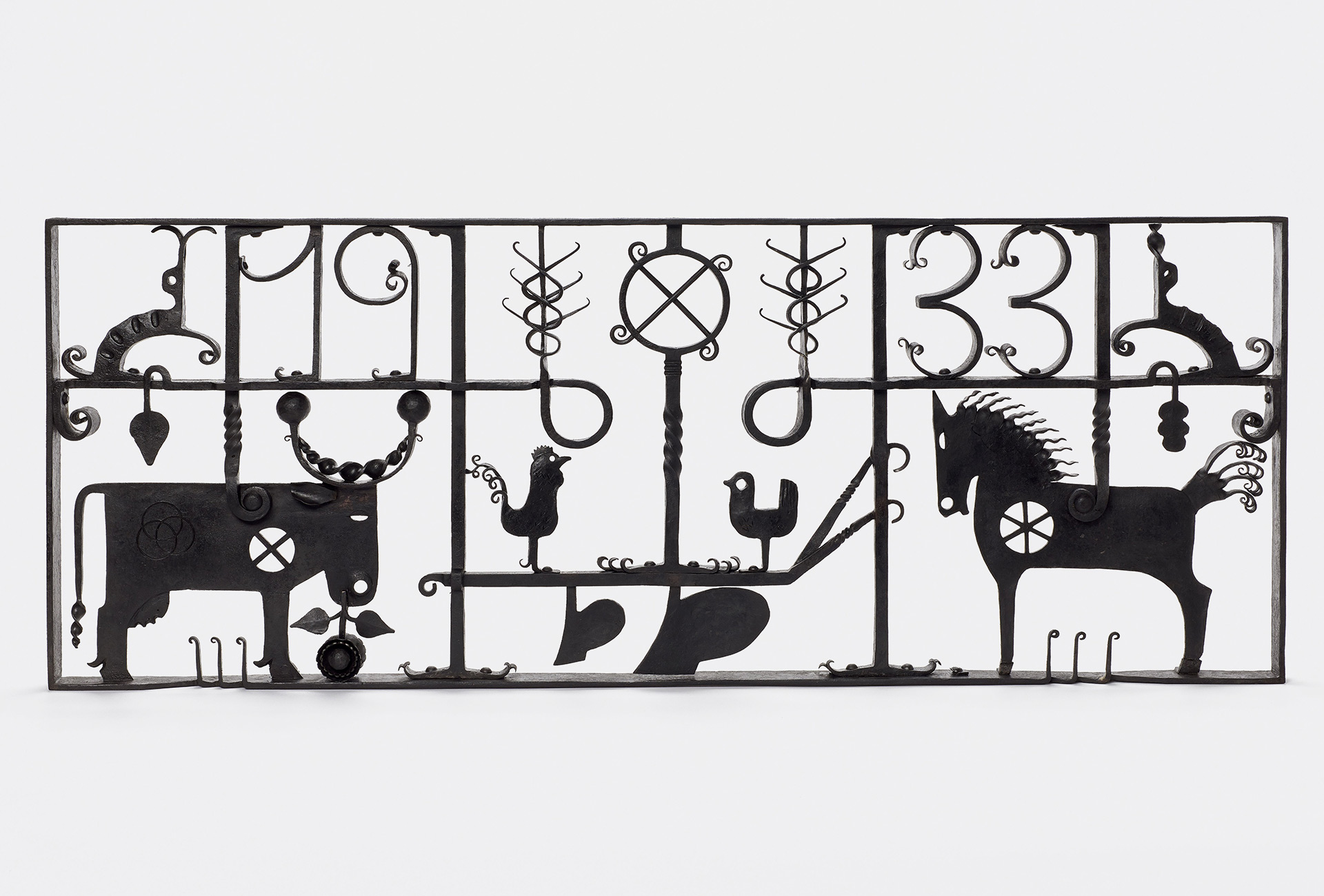
Ludolf Buuk, grille, Siegfried Prütz workshop, Isernhagen, 1933. Wrought iron. Acquired by Ludolf Buuk, 1934. Photo: Esther Hoyer.
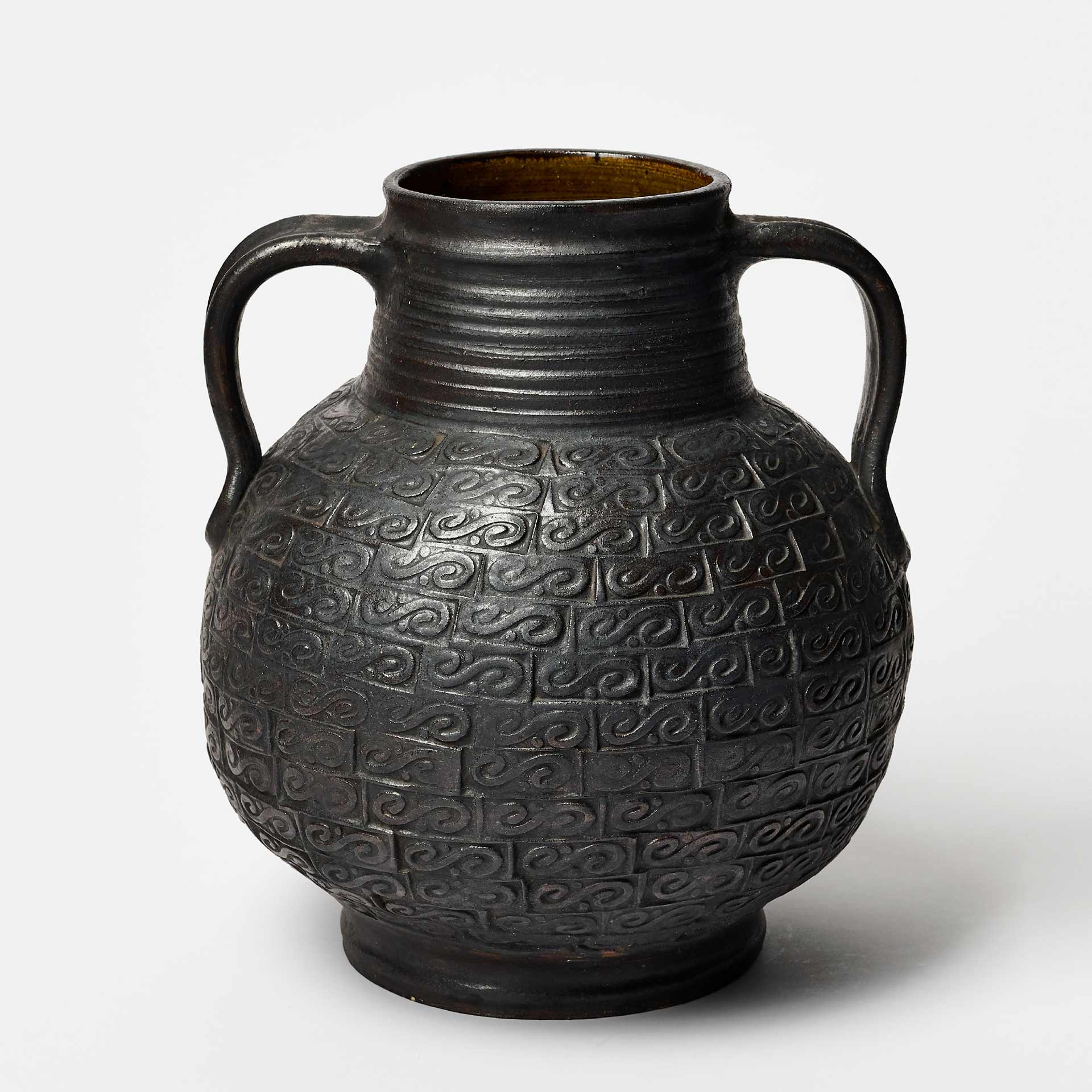
Two-handled jug, Großschönauer Werkstätten Hentschel & Fischer Großschönau, before 1937. Stoneware, black glazed. Grassimesse Autumn 1937. Photo Esther Hoyer.

Wall hanging Hamburg, designed by Margarethe Möller, produced by Bertha Möller, Kupfermühle in Holstein, around 1936. Wool, hand-woven. Purchased from Bertha Möller, Grassimesse Spring 1937. Photo Esther Hoyer.
The exhibition shows the interplay between crafts, design, and political ideology, and how strongly the Nazi state influenced design, production, and representation. At the same time, it explores the scope for action that designers used or sought within the authoritarian system. “This is not only about form and aesthetics, but also about the political and social function of design in the context of dictatorial power … Exhibitions, publications, artist biographies, and not least, the purchasing behavior of the masses at the time demonstrate a complex mixture of adaptation, continuity, and resistance.” A one-dimensional narrative of the era can therefore not be assumed, explain the organizers.
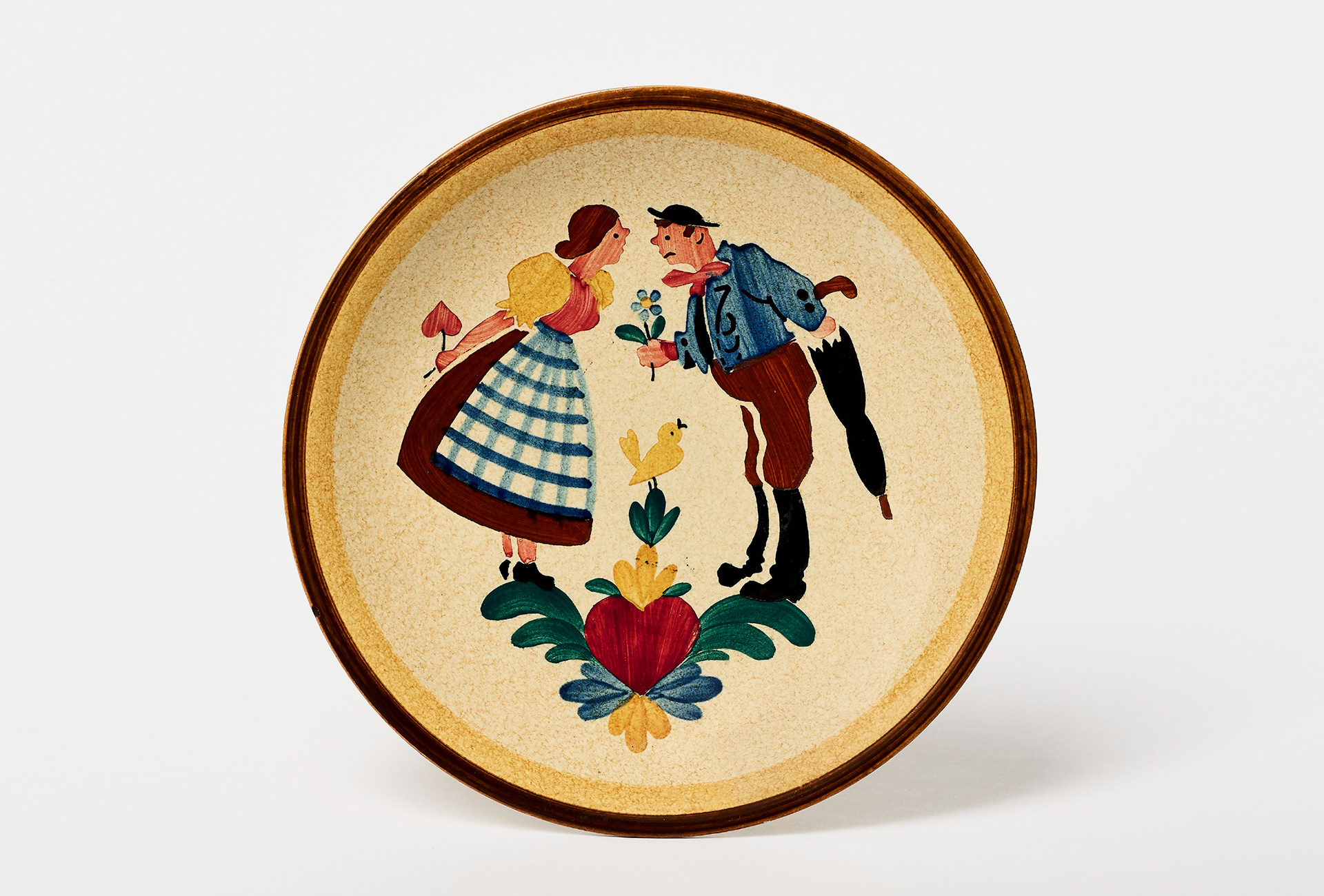
Decorative plate Kirmes, Villeroy & Boch, decoration by Gustav Spoerri, Dresden, circa 1936. Stoneware, glazed and stencil painted. Donated by a private individual. Photo: Esther Hoyer.
According to the organizer, the GRASSI Museum of Applied Arts took on a multifaceted role during the Nazi era: “In the 1930s, it developed into a central location where design ideas were negotiated and presented. Although the Grassimessen and special presentations occasionally allowed for deviations from ideological guidelines, the museum was nevertheless obliged to cooperate with state institutions and make its rooms available for propaganda exhibitions.”
Fortunately, with its active collection policy and annual Grassi Fair, the museum in Leipzig is now a place where contemporary crafts and their growing intersections with art and design are cultivated in an exemplary manner – free from any ideology and with a charisma that extends far beyond Germany’s borders.
- —
-
GRASSI Museum für
Angewandte Kunst
Johannisplatz 5–11
D-04103 Leipzig - Link